Caffeine in energy drinks vs soda: the full milligram chart
The caffeine in energy drinks ranges from about 80 mg a can to 300 mg. Red Bull's 8.4 oz can has 80 mg, a 16 oz Monster has 160 mg, a 12 oz Celsius has 200 mg, and a 16 oz Bang has 300 mg. Soda sits far lower — regular Coke is 34 mg.
How much caffeine is in an energy drink, can by can
The category splits into three tiers. The legacy cans — Red Bull, Monster, Rockstar, NOS — run around 10 mg per fluid ounce, so a full can lands between 80 and 160 mg. The fitness-shelf brands — Celsius, Alani Nu, Ghost, C4 — standardize on 200 mg regardless of can size, which makes their 12 oz cans the most concentrated things in the cooler. Above them sits a 300 mg tier only a couple of brands occupy.
These are manufacturer-stated amounts for standard US cans. Flavors within a line differ and formulations get revised, so the can in your hand is the authority.
| Drink | Type | Serving | Caffeine | mg per fl oz |
|---|---|---|---|---|
| Bang | Energy | 16 fl oz | 300 mg | 18.8 |
| Reign Total Body Fuel | Energy | 16 fl oz | 300 mg | 18.8 |
| Celsius Essentials | Energy | 16 fl oz | 270 mg | 16.9 |
| Celsius (original) | Energy | 12 fl oz | 200 mg | 16.7 |
| Alani Nu | Energy | 12 fl oz | 200 mg | 16.7 |
| Ghost Energy | Energy | 16 fl oz | 200 mg | 12.5 |
| Monster Energy | Energy | 16 fl oz | 160 mg | 10.0 |
| Rockstar Original | Energy | 16 fl oz | 160 mg | 10.0 |
| NOS | Energy | 16 fl oz | 160 mg | 10.0 |
| Monster Zero Ultra | Energy | 16 fl oz | 140 mg | 8.8 |
| Red Bull | Energy | 12 fl oz | 114 mg | 9.5 |
| Drip coffee | Reference | 8 fl oz | ~95 mg | ~12 |
| Red Bull | Energy | 8.4 fl oz | 80 mg | 9.5 |
| Mtn Dew Zero Sugar | Soda | 12 fl oz | 68 mg | 5.7 |
| Mountain Dew | Soda | 12 fl oz | 54 mg | 4.5 |
| Diet Coke | Soda | 12 fl oz | 46 mg | 3.8 |
| Dr Pepper | Soda | 12 fl oz | 41 mg | 3.4 |
| Pepsi | Soda | 12 fl oz | 38 mg | 3.2 |
| Coca-Cola Classic | Soda | 12 fl oz | 34 mg | 2.8 |
| Coke Zero Sugar | Soda | 12 fl oz | 34 mg | 2.8 |
| Barq's Root Beer | Soda | 12 fl oz | 22 mg | 1.8 |
| Sprite, 7UP, Fanta Orange | Soda | 12 fl oz | 0 mg | 0 |
Caffeine in soda: lower than its reputation
Soda is the category people consistently overestimate. A 12 oz Coca-Cola Classic carries 34 mg — about a third of a small cup of drip coffee. Coke Zero Sugar matches it at 34 mg. Diet Coke breaks the pattern at 46 mg, and Mtn Dew Zero Sugar carries more than regular Mountain Dew, 68 mg against 54 mg. The diet versions aren't a milder option on caffeine; they're separate formulas with their own numbers.
Colas are the caffeinated end of the shelf. Sprite, 7UP, and most orange sodas have none, and root beer is split — Barq's has 22 mg while diet Barq's has zero. Fountain drinks are looser, since ice displaces a third of the cup, but even a 32 oz fountain Coke lands under a single 12 oz Celsius.
Why the caffeine in energy drinks hits harder than the milligrams suggest
Concentration explains less than people assume. Monster runs 10 mg per fluid ounce; drip coffee runs closer to 12. A 16 oz Monster and a large coffee are roughly the same dose, and they still don't feel the same. The difference is delivery.
Cold carbonated drinks get finished fast. Hot coffee is sipped over twenty or thirty minutes because it's too hot to do otherwise, spreading the same 160 mg across a long absorption window. A can goes down in five, so blood levels climb a steeper curve to a higher peak — and caffeine generally peaks 30 to 60 minutes after it's swallowed. That peak is what registers as the hit.
Timing compounds it. Cans get opened before a workout or on a drive, often on an empty stomach; food slows gastric emptying and flattens the curve, and coffee more often arrives with breakfast. Concentrated shots are the extreme case — 5-hour Energy Extra Strength holds about 230 mg in under two ounces.
None of this changes the tail. Once absorbed, the same milligrams clear on the same schedule, which is why caffeine's half-life matters more for sleep than how fast the drink went down.
Guarana, yerba mate, and green tea extract: caffeine the label may not count
In the US, declaring a caffeine quantity on a label is voluntary. Ingredients must be listed; their amounts don't have to be. That gap matters here, because several common energy-drink ingredients are themselves caffeine sources: guarana seed extract, yerba mate, green tea extract, kola nut, coffee fruit extract. Guarana seed is unusually caffeine-dense — several times a coffee bean by weight.
Some brands state "total caffeine from all sources," which folds the botanicals in. Others print a figure covering added caffeine only, with guarana or green tea extract sitting further down the ingredient list, and proprietary blends give a blend weight rather than each component. If a can lists a caffeine number and a caffeinated botanical without the words "total" or "from all sources," treat the printed figure as a floor.
The cans that use most of a day's published ceiling
The FDA cites 400 mg a day as an amount not generally associated with negative effects in healthy adults. Against that reference, Bang and Reign are the two cans that come close on their own: 300 mg each, three-quarters of the daily figure in one sitting. Two 12 oz Celsius cans land exactly at 400 mg with nothing else counted, and the American College of Obstetricians and Gynecologists puts the pregnancy guideline under 200 mg a day — a single Celsius or Alani Nu.
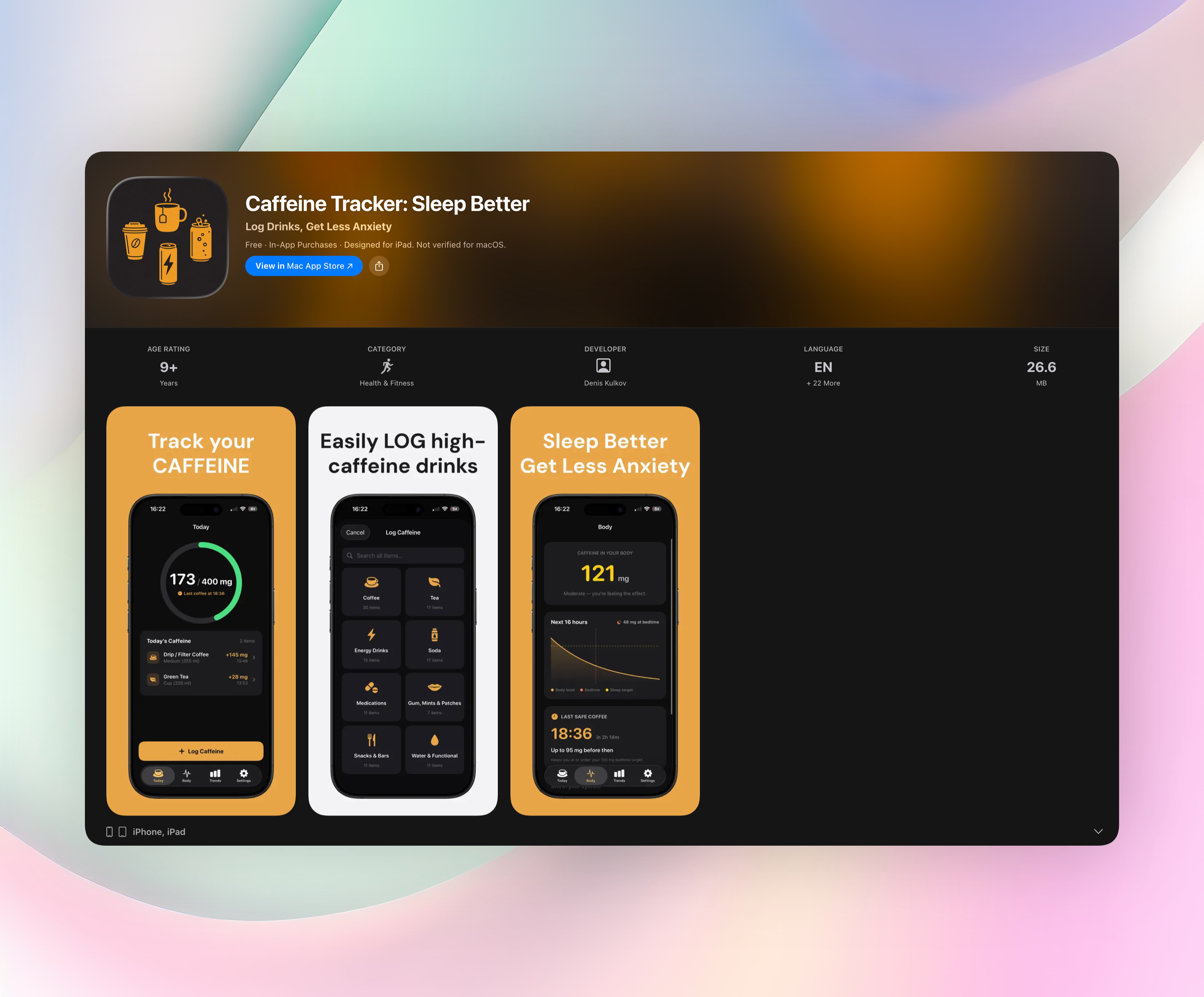
The arithmetic is simple and almost nobody does it, because the 200 mg can arrives at 2 p.m. and the two coffees before it have already been forgotten. Caffeine Tracker, a caffeine tracking app for iPhone, holds the running total, which is what makes a single 200 mg can read as half a day's ceiling rather than just a drink.
Those are population guidelines, not personal ones — sensitivity varies widely, and where the 400 mg figure comes from is worth knowing before reading it as a target.
FAQ
Does Coke Zero have caffeine?
Yes. Coke Zero Sugar has 34 mg in a 12 oz can, the same as regular Coca-Cola Classic. The zero-sugar formula changes the sweetener, not the caffeine. Diet Coke is a different formula entirely and sits higher, at 46 mg.
How much caffeine is in a Monster?
A standard 16 oz Monster Energy has 160 mg; Monster Zero Ultra is 140 mg. Larger 24 oz cans scale up proportionally, so check whether the can is labeled as one serving or two.
How much caffeine is in a Celsius?
The original 12 oz Celsius has 200 mg — the same as a 16 oz Ghost, in three-quarters the volume. Celsius Essentials, sold in 16 oz cans, goes to 270 mg. Alani Nu matches the original at 200 mg per 12 oz can.
How much caffeine is in a Red Bull?
The 8.4 oz original can has 80 mg. The 12 oz can has 114 mg and the 16 oz can about 151 mg, since Red Bull holds concentration roughly constant at 9.5 mg per fluid ounce. Sugarfree and the Editions flavors match the regular version.
Is an energy drink stronger than a cup of coffee?
Per ounce, usually not — drip coffee runs about 12 mg per fluid ounce, above Monster or Red Bull. Per container, often yes, since cans are 12 to 16 oz and a home coffee cup is 8.
Free Caffeine tools
- Caffeine Half-Life & Sleep CalculatorA caffeine half life calculator for bedtime. Enter how many mg you had, when you had it and when you plan to sleep, and see how much caffeine is still in your system at bedtime, the share of the dose that is left, and when it falls to 50 mg.
- Caffeine Withdrawal Timeline PlannerMap a gradual caffeine reduction from your current daily intake to a day-by-day target, with common caffeine withdrawal windows shown alongside each date.
- Caffeine in Chocolate CalculatorChoose a chocolate type and enter a serving size to estimate the caffeine in that chocolate serving.
- Coffee Caffeine CalculatorPick your brew method and cup size to see how much caffeine is in a cup of coffee — the total mg, the mg in a standard 8 fl oz serving, and how much of the FDA's 400 mg daily guidance that uses. Typical values, not a measurement of your specific cup.
- Coffee to Water Ratio CalculatorFind how much grounds per cup of coffee you need, with grams, approximate tablespoons, water and a 1:n ratio for your brew method.
- Daily Caffeine Limit CalculatorSee how much caffeine you can have a day according to published guidance for your life stage, with an adult weight-based single-dose figure and drip coffee equivalent.
- Energy Drink Caffeine CalculatorChoose a brand and product, then enter the number of cans or shots to estimate total caffeine, caffeine density and the share of the FDA 400 mg daily figure.
- Espresso Caffeine CalculatorWork out how much caffeine is in an espresso shot: choose how many shots you pulled, how you pulled them and which beans went in. You get the total in mg, the mg per shot and how much of the FDA's 400 mg a day it uses.
- Half-Life Formula CalculatorEnter a starting amount, half-life and elapsed time or target amount. See the remainder, decay table, curve and worked formula for any substance.
- Matcha & Tea Caffeine CalculatorEstimate how much caffeine is in matcha green tea and other teas from powder weight or brewed serving size. See the result in mg and as a share of the FDA 400 mg daily figure.
- Soda Caffeine CalculatorEstimate total caffeine intake from soda servings using typical caffeine values for common soft drinks.
- Yerba Mate Caffeine CalculatorEstimate yerba mate caffeine from the amount of dry leaf, water volume and number of servings. Results are typical estimates, not exact measurements.